
The problem it solves
Many reviews are hard to audit because the initial decisions are scattered across documents, conversations or implicit criteria. If the question, population, interventions, comparators, outcomes and selection criteria are not clearly defined, screening and extraction inherit that ambiguity.
What Vetra does
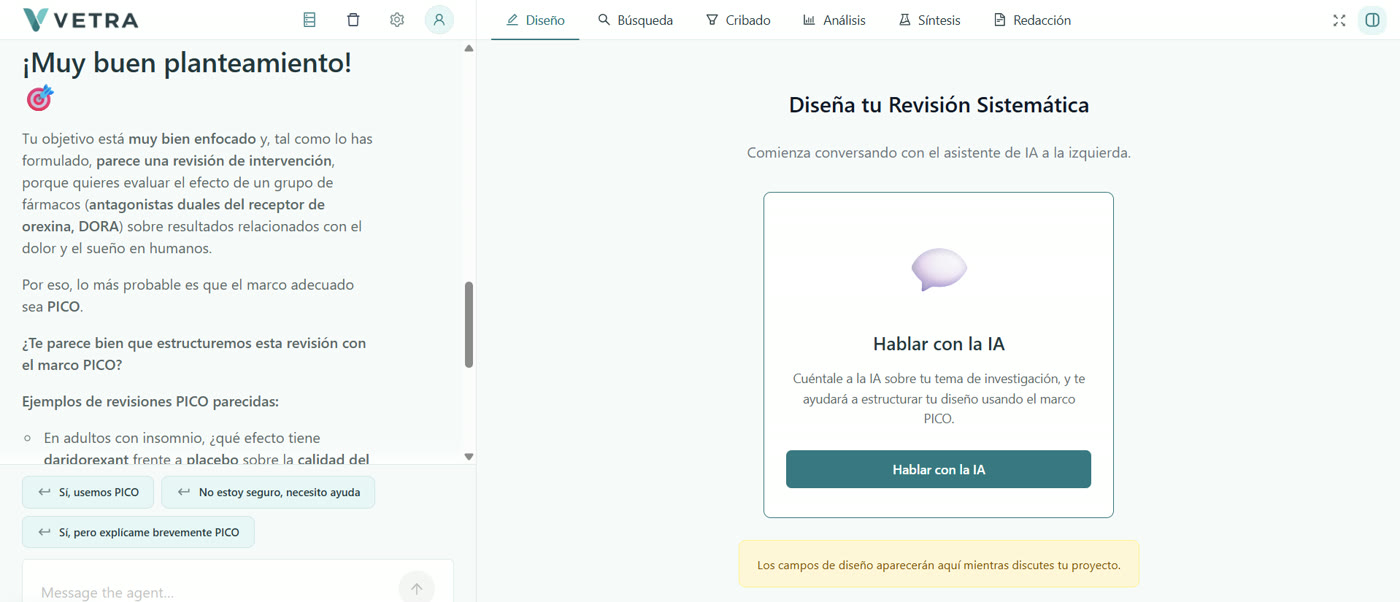
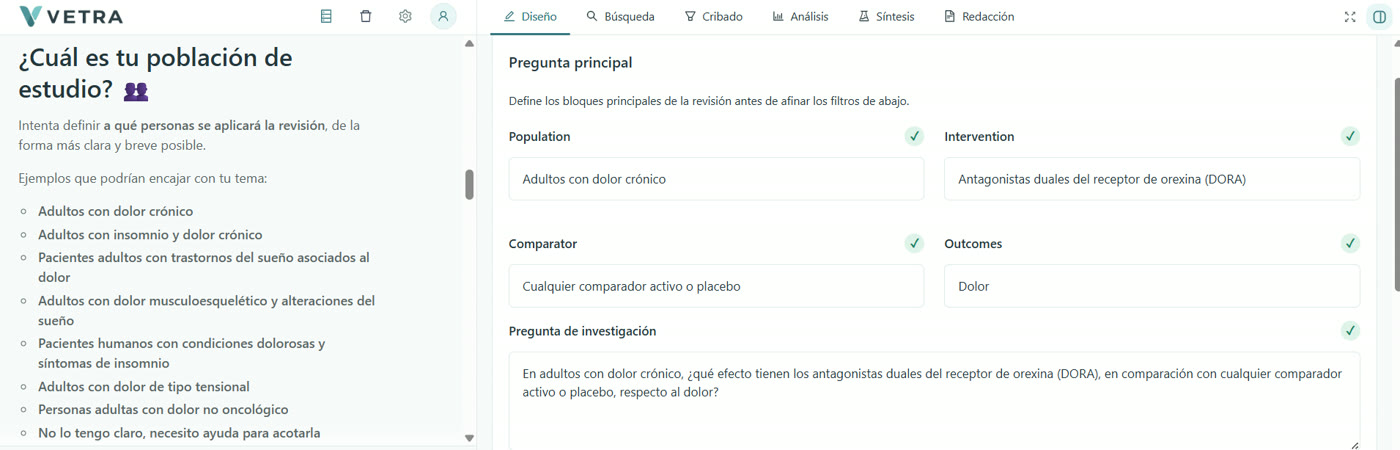
- Structures the research question with frameworks such as PICO, PECO or other equivalents depending on the review type.
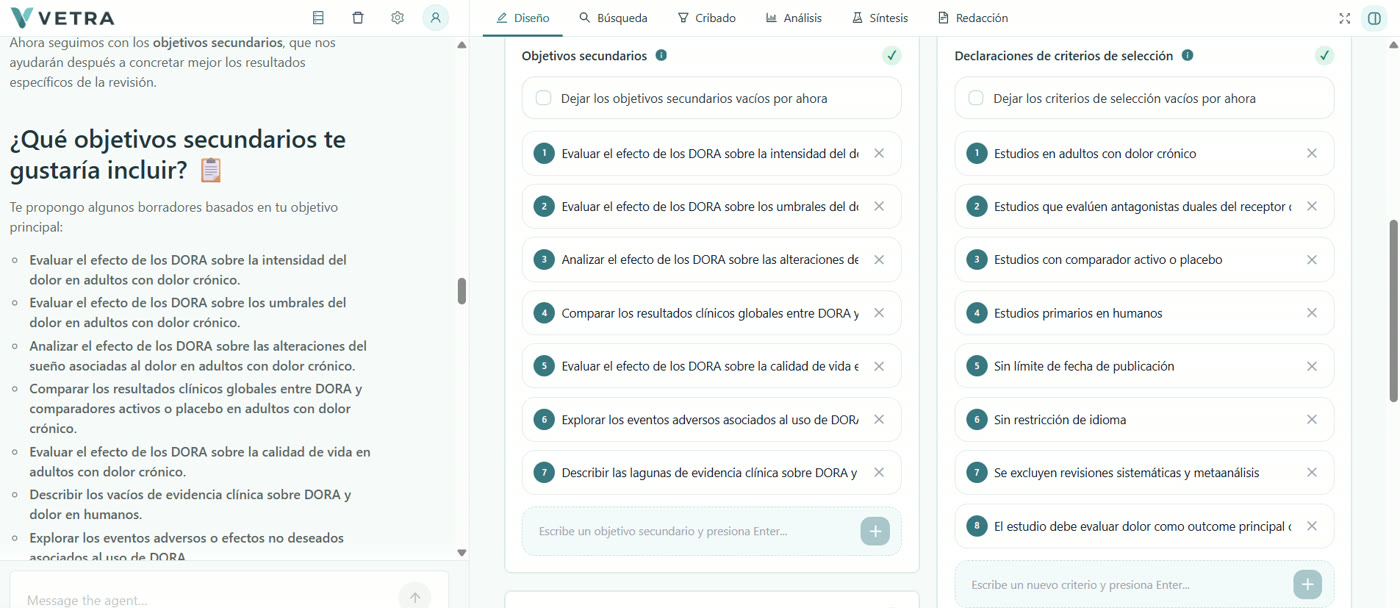
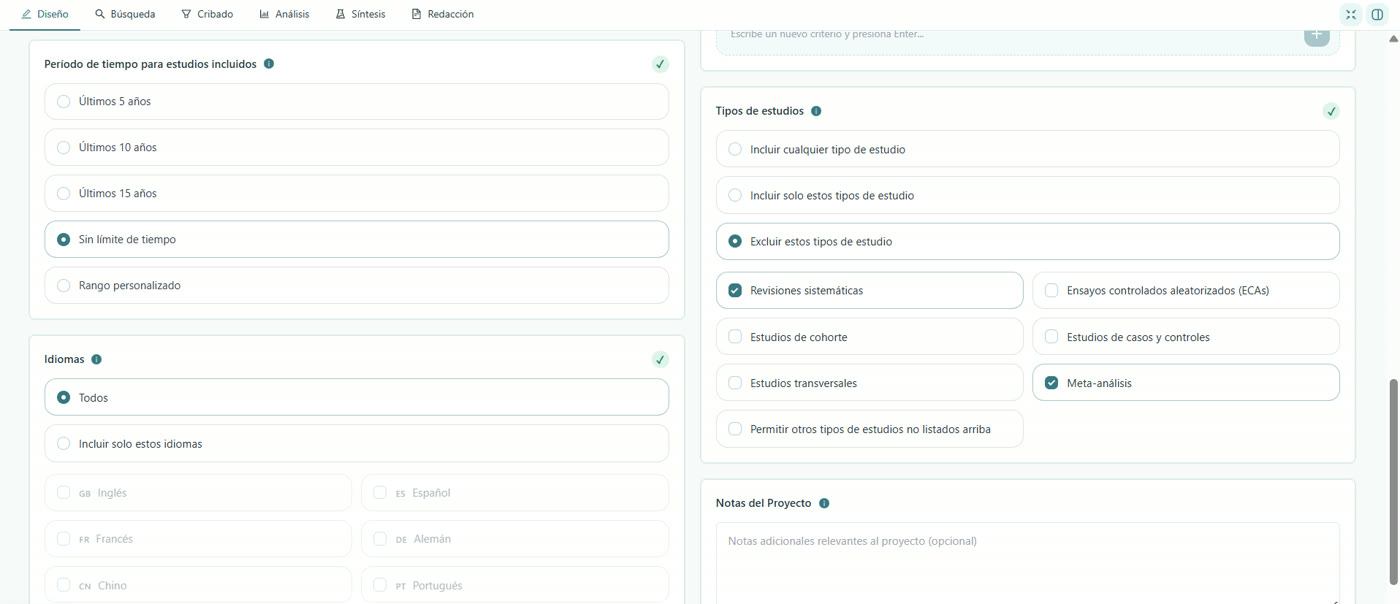
- Defines secondary objectives, outcomes, variables, time frame, languages and included study types.
- Turns inclusion and exclusion criteria into explicit rules that are reused later in screening and extraction.
- Allows subgroups, planned sources and methodological restrictions to be recorded.
- Generates a working protocol version that can be reviewed before the search begins.
What the AI does and what the researcher decides
The AI can suggest wording, spot incomplete criteria and flag possible ambiguities. The researcher decides the final formulation, validates the criteria and keeps responsibility for the methodological design.
Vetra does not turn a poorly designed question into a solid review on its own. Its role is to make decisions visible and reduce inconsistencies before they affect the rest of the workflow.
What is recorded
- Research question and protocol version.
- Selection criteria, time frame, languages, study types and changes made during design.
- Ownership of each decision and modification date.
- Methodological notes relevant to PRISMA, PROSPERO or internal documentation.
Limits and RAISE alignment
RAISE recommends that AI use be justified, documented and subject to human oversight. In this stage, Vetra is positioned as support for protocol structuring, not as a substitute for the researcher’s methodological expertise.