
The problem it solves
Assessing risk of bias requires applying complex criteria consistently. When answers and justifications are not properly recorded, it becomes difficult to review disagreements, reproduce the judgment or defend the final interpretation.
What Vetra does
- Suggests or selects checklists according to the study type and the review question, such as Cochrane, QUADAS, JBI and others.
- Guides the researcher through domains, signalling questions and judgment criteria.
- Can highlight relevant fragments from the full text to support the review.
- Creates structured records of answers, justifications, uncertainty and final decision.
How Vetra supports complex judgments
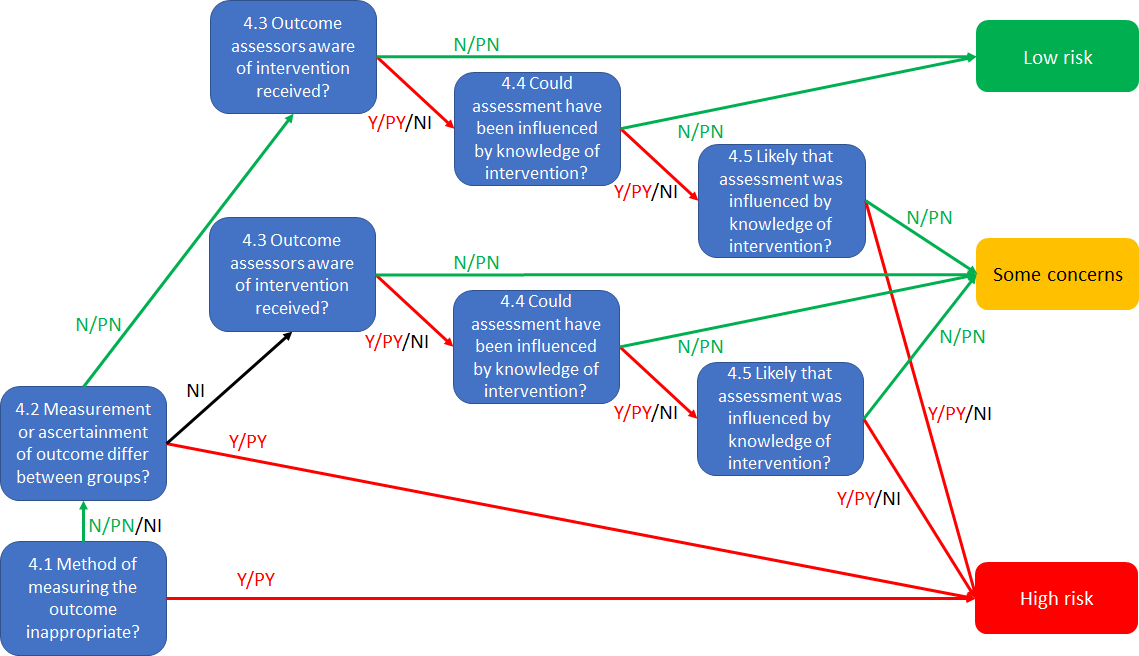
This figure summarises the type of decision logic Vetra keeps visible when the researcher applies complex scales such as RoB 2. The tool orders the signalling questions by domain, records each answer and preserves the traceability of the final judgment.
It does not replace methodological judgment. It helps the researcher follow consistent criteria and review more clearly why a study ends up with low risk, some concerns or high risk.
What the researcher decides
The final risk-of-bias judgment must belong to the researcher. The AI can help locate textual evidence or detect inconsistencies, but it should not replace the methodological assessment when that assessment influences confidence in the conclusions.
What is recorded
- Tool used, version or methodological reference.
- Domain-level answers and textual justification.
- Responsible reviewer, changes, disagreements and resolution.
- Global result and relevant warnings for the synthesis.
Standards and limits
Vetra is positioned as support for tools such as Cochrane RoB 2, QUADAS, JBI or others depending on the design. The checklist choice and final judgment must be declared transparently in the review report.